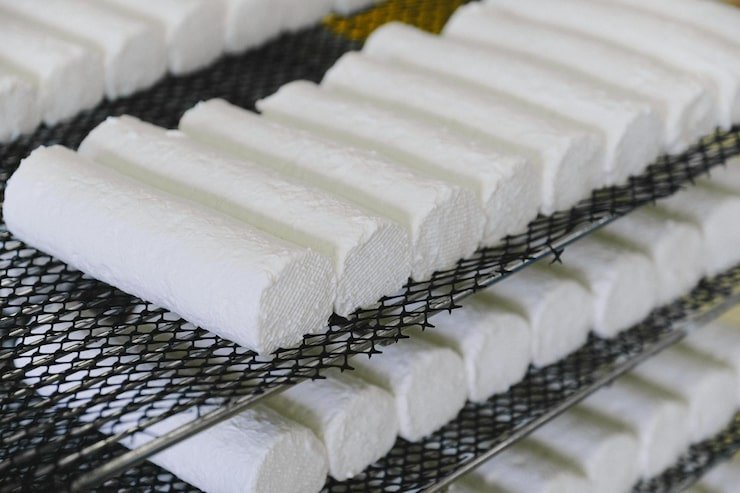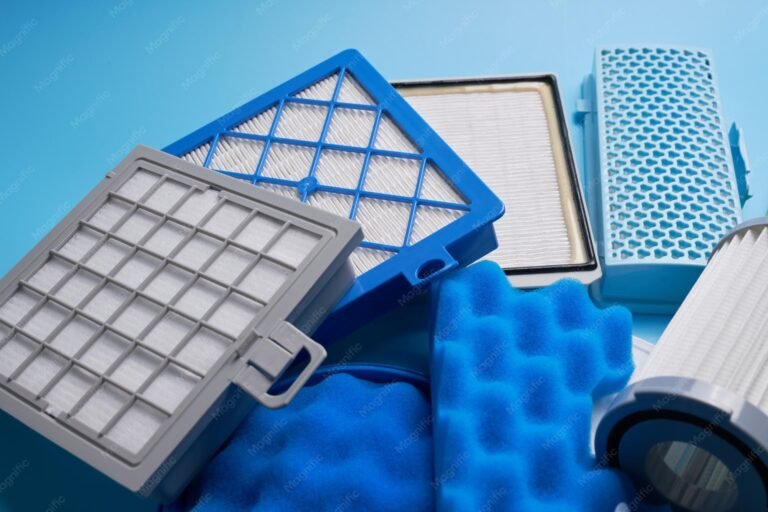
Air filtration can lose efficiency even when the filter housing and airflow systems are working well. The problem may be the foam itself. The wrong pore size can allow particles to pass through. A foam that is too fine can also restrict airflow and increase pressure drops.
The right air filter foam helps balance particle capture and airflow. Its performance depends on more than PPI. Thickness, density, material type, and the operating environment also matter.
This makes foam selection an important part of filter design. A good specification can support steady airflow, longer service intervals, and better protection for equipment.
Start With the Particle Size
The first step is to understand what the filter needs to be removed. Dust, fibres, dirt, and other particles can vary greatly in size.
A Air filter foam with large pores is useful for coarse particles. A finer foam may be needed when smaller particles must be captured.
PPI, or pores per inch, is used to describe the foam pore structure. A higher PPI generally means smaller pores. This can improve particle capture but may also increase airflow resistance.
The goal is not to choose the finest foam available. It is to choose the coarsest grade that can meet the filtration needs.
This approach can help maintain better airflow while avoiding unnecessary pressure drops.
Choose PPI Based on Airflow Needs
PPI has a direct effect on air filter foam efficiency. However, filtration efficiency should always be considered along with airflow.
A general guide is:
- 10–20 PPI: Suitable for coarse pre-filtration and larger particles
- 20–45 PPI: Common for general industrial and HVAC pre-filtration
- 45–60 PPI: Useful for finer pre-filtration
- 60 PPI and above: Used for more specialised filtration needs
A high-PPI foam is not automatically the best option. If the system does not need very fine filtration, using one may create more resistance without a useful gain.
Good filter foam performance comes from finding the right balance between particle capture and airflow.
Give The Foam Enough Depth
Pore size is only one part of the selection process. Foam thickness also affects how the filter performs over time.
A thin layer may collect much of the dust near its surface. As the surface becomes loaded, airflow resistance can rise quickly.
A thicker layer gives particles more space to collect through the depth of the foam. This can help the filter handle a greater dust load before cleaning or replacement is needed.
For many applications, the following approach can be useful:
- 10–15 mm for basic pre-filtration
- 20–30 mm for general industrial and HVAC use
- 40–50 mm for higher dust loads
- 50 mm or more where deeper filtration is required
The housing depth must also be considered. There is no benefit in selecting a thickness that cannot fit securely.
Select The Right Foam Formulation
The working environment can affect foam life. Moisture, heat, oils, and chemicals may all change which material is suitable.
Polyether polyurethane foam offers good resistance to hydrolysis. This makes it useful in humid or moisture-prone environments.
Polyester polyurethane foam can offer better resistance to oils and certain chemicals. It may be suitable for applications where the foam is exposed to lubricants or process fluids.
Material selection can therefore have a direct effect on filter foam performance.
Before choosing air filtration foam, check the conditions in which the filter will operate. The foam should be compatible with the surrounding environment and cleaning process.
Avoid Common Foam Selection Mistakes
Poor filtration does not always mean that the entire filter system needs to be redesigned. Often, the problem starts with an incorrect foam specification.
Common issues include:
- PPI is too high: The foam may restrict airflow more than needed.
- Thickness is too low: The foam may load quickly in a dusty environment.
- Material is unsuitable: Moisture, oil, or chemicals can damage the foam.
- Foam is undersized: Gaps around the edges can allow air to bypass the filter.
- Density is too low: Repeated cleaning or compression may affect the foam’s shape.
Each issue can reduce air filter foam efficiency. Careful specification at the design stage can help prevent these problems.
Match Foam Density to The Application
Density affects the physical strength and stability of foam. It is different from PPI, which describes the pore structure.
Higher-density foam can provide better resistance to compression and repeated handling. This can be important when filters are washed and reused.
Lower-density foam may work well for applications where the filter is replaced regularly.
The correct density depends on how the filter will be installed and maintained. A reusable filter that is cleaned often may need a stronger foam than a disposable pre-filter.
Choosing the right density supports consistent filter foam performance throughout the service period.
Think About Filter Cleaning
Some foam filters are designed to be cleaned and reused. This can reduce the need for frequent replacement.
However, cleaning methods must match the foam material. Excessive force, unsuitable chemicals, or poor drying can damage the cell structure.
Before selecting filter foam, ask:
- Will the filter be washed?
- How often will it be cleaned?
- What cleaning agent will be used?
- How will it be dried?
- How many cleaning cycles are expected?
These points are important when designing reusable filter foam solutions.
Use Custom Foam for Better Fit
Filter housings are not always standard. Some systems require unusual shapes, profiles, or dimensions.
Custom cutting allows air filtration foam to match the housing more closely. This can reduce gaps and limit bypass airflow.
Custom foam can also reduce the need for on-site cutting. This helps keep dimensions more consistent during production.
For OEM and industrial applications, foam solutions can be developed around the actual housing rather than forcing a standard sheet to fit.
This is especially useful where the filter must be installed in a compact or irregular space.
Check The Foam Before Bulk Production
Testing a sample before placing a large order can prevent costly changes later.
Check the foam for:
- Correct PPI
- Required thickness
- Suitable density
- Dimensional accuracy
- Airflow behaviour
- Material compatibility
- Fit inside the housing
This gives manufacturers a chance to identify issues early.
A supplier that can support sampling and custom fabrication can also make development easier. The right filter foam solutions should match the needs of the complete filtration system.
Build Better Filtration with the Right Specification
Improving filtration starts with choosing foam based on the actual application. Air filter foam should provide the required particle capture without creating unnecessary airflow resistance. PPI, thickness, density, and material formulation must work together.
Good filter foam performance is not based on one specification. The right combination can support better airflow, longer service intervals, and reliable filtration.
When selecting air filtration foam, manufacturers should also consider cleaning, operating conditions, and housing dimensions. Custom foam solutions can be useful where standard sizes do not provide the right fit.
An experienced polyurethane foam manufacturer can help businesses assess these requirements and select a suitable foam grade. This is especially useful for applications that need specific PPI, thickness, density, or custom dimensions.
Karefoam provides reticulated polyurethane foam for filtration and other industrial applications. They support different foam specifications and custom requirements based on intended use. Their approach focuses on helping customers select suitable filter foam solutions rather than relying on a one-size-fits-all product.