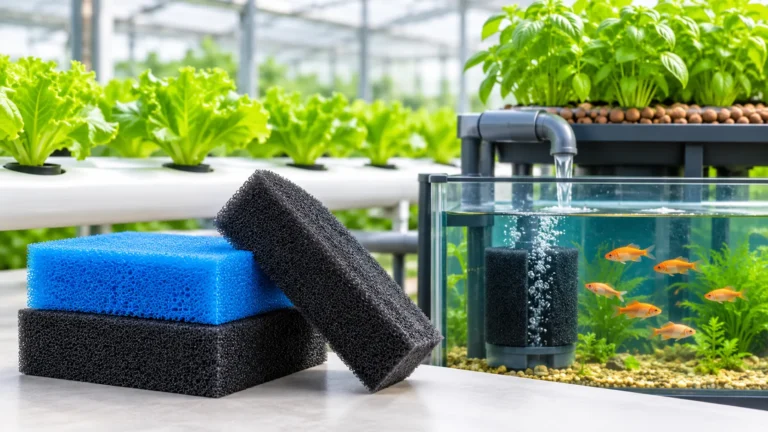
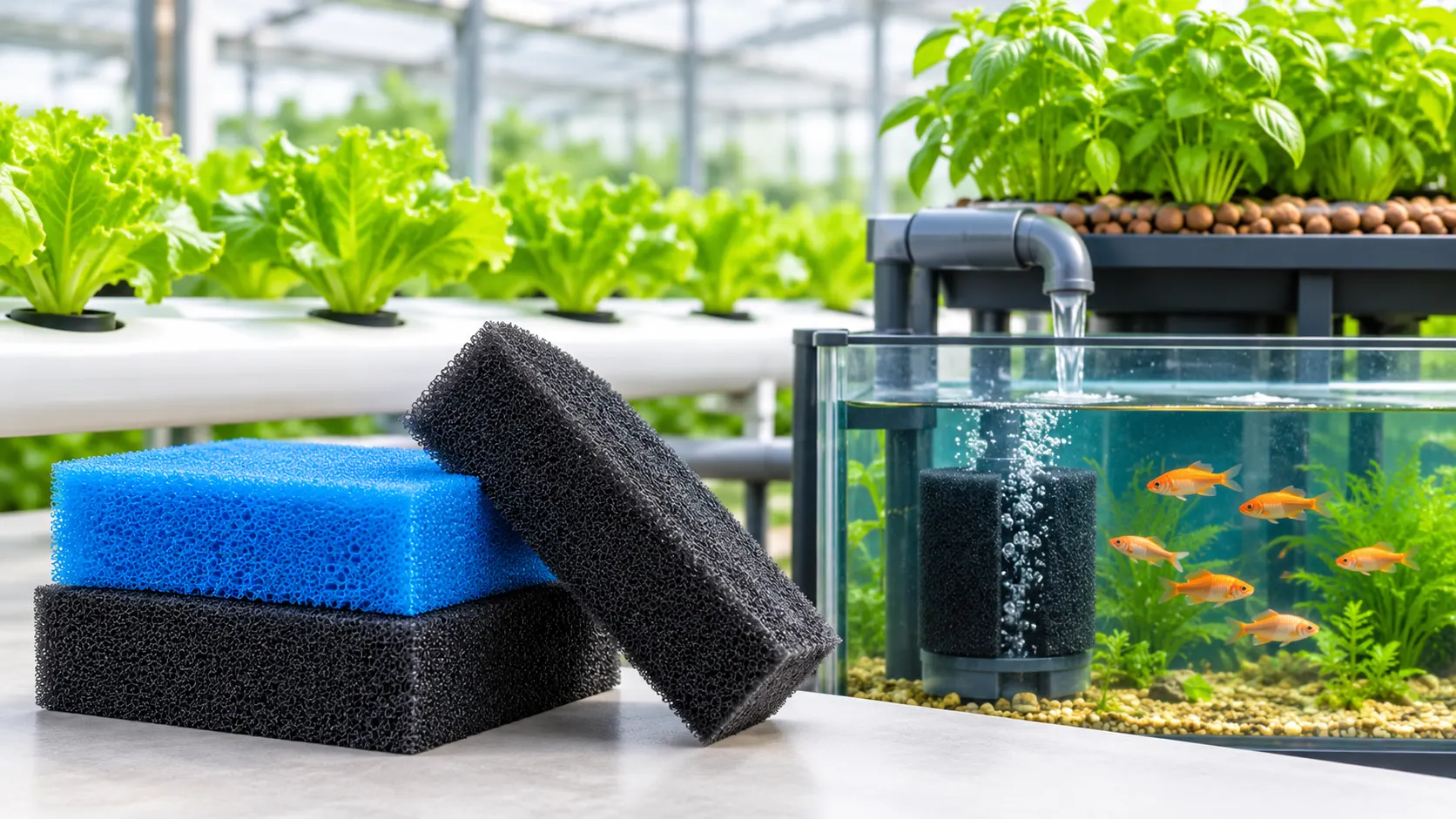
Clean water is important for both hydroponic and aquaponic systems. As water moves through tanks, pipes and growing beds, it can carry fish waste, plant roots, leftover food and other unwanted particles. If these particles collect inside the system, they may block pipes, affect water movement and increase cleaning work.
Foam filters help manage this problem by catching solid waste as water passes through them. They also offer a surface where useful bacteria can grow. These bacteria play a role in maintaining water quality, especially in aquaponic systems.
When choosing filter foam for hydroponics or filter foam for aquaponics, it is important to check the pore size, thickness, density and water flow requirements. The foam should also be suitable for regular contact with water.
How Does Foam Help With Water Filtration?
Foam filters work by allowing water to pass through their small openings. As water moves through the foam, some of the solid particles get caught inside it. The cleaner water then flows towards the next part of the filtration system.
Many foam filters have an open-cell structure, where the small openings inside the material are connected and allow water to pass through. These foam solutions help trap unwanted particles while maintaining water flow. The size of the openings affects how easily water moves through the foam and how much waste it can collect.
Foam filters mainly support two types of filtrations:
- Mechanical filtration: The foam catches solid waste, leftover fish food, plant debris and other particles present in the water.
- Biological filtration: The surface of the foam provides space for beneficial bacteria to grow. These bacteria help break down ammonia into nitrite and then nitrate.
Both processes are useful in aquaponics. Fish produce waste that enters the water, while beneficial bacteria help convert some of it into nutrients that plants can use.
However, foam alone cannot manage the entire filtration process. It works along with other parts of the system to help maintain suitable water conditions.
The right foam depends on how much waste the system produces, how quickly water needs to flow and what the filter is designed to do.
How Hydroponic and Aquaponic Systems Use Foam Filters ?
Hydroponics and aquaponics use water to grow plants, but their filtration requirements are not the same.
In hydroponic systems, plants receive nutrients through water instead of soil. This water moves around the growing setup and reaches the plant roots. During circulation, small root pieces, algae and other unwanted particles may enter the water.
Using filter foam for hydroponics helps catch some of these particles before they reach pumps, pipes and other equipment. This can help maintain water movement and reduce the amount of debris inside the system.
Aquaponics involves raising fish and growing plants together. Fish waste becomes part of the nutrient supply, but solid waste still needs to be removed. Too much waste can affect water quality and make filtration more difficult.
A suitable filter foam for aquaponics helps collect solid waste while allowing water to pass through. It can also provide a surface for beneficial bacteria, supporting the biological filtration process.
| System | Main Filtration Requirement | How Foam Helps |
| Hydroponics | Removing root pieces and suspended particles | Catches debris before it reaches pumps and pipes |
| Aquaponics | Handling fish waste and supporting bacterial growth | Traps solid waste and provides space for beneficial bacteria |
| Recirculating Systems | Keeping water clean during repeated circulation | Collects particles as water passes through the filter |
The foam should match the size and design of the filtration unit. A small growing setup may need a different foam grade from a larger system that handles more water.
5 Things to Check Before Choosing Filter Foam
Not all foam materials are made for water filtration. Before selecting one, buyers should understand its properties and check whether it is suitable for their intended use.
Here are five factors worth checking.
- Pore Size and PPI
PPI (pores per inch) measures how many pores fit in one inch of foam. Lower-PPI foam has larger openings, allowing water through easily and catching larger particles. Higher-PPI foam traps finer particles but may clog faster in waste-filled water. Choose PPI based on particle size and how often you can clean the filter.
- Foam Thickness
Thickness affects water flow and waste capacity. Thicker foam collects more waste but must fit the filter; excess thickness can impede flow or complicate installation.
- Foam Density
Density refers to how much a certain volume of foam weighs. It gives an idea of the material’s physical structure.
Buyers should not select foam based on density alone. It is important to consider PPI and thickness as well, since all three properties influence how the foam works in a filtration setup.
- Water Flow Rate
The selected foam should allow water to pass through at the rate required by the system.
If water faces too much resistance, circulation may slow down. This can affect the filtration process and increase the need for cleaning.
- Material Suitability
Because the foam will stay in contact with water, check its suitability, durability, chemical compatibility, and ability to withstand regular exposure. Comparing these factors helps identify the best hydroponic filter foam for the equipment.
Different Foam Types and Where They Can Be Used
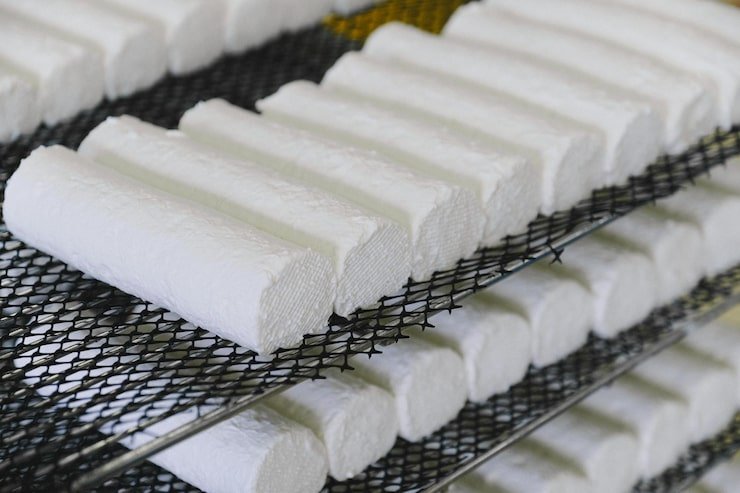
Open-cell polyurethane foam filters water and air through connected pores. Reticulated foam has a more open structure that lets water pass while trapping suspended particles, making it suitable for some water filtration applications.
For example, air filter foam is mainly developed to filter air. It should not automatically be used in water filtration systems. Buyers need to check its material and whether it is suitable for continuous water contact.
A paint roller sponge also has a different purpose. It is made for applying paint and creating surface finishes, so it should not be treated as a replacement for aquatic filtration foam.
When buying aquaponics filter foam, check the product specifications carefully. The foam should suit the water conditions, required flow rate and cleaning schedule of the system.
How to Install and Maintain Foam Filters
Selecting the right foam is only one part of the process. Proper installation and regular cleaning are also needed to keep the filter working well.
Over time, waste can collect inside the foam and restrict water movement. Checking the filter regularly helps identify this problem before it affects the system.
Here are some basic maintenance tips:
- Place the foam correctly: Fit it inside the filter chamber so that water passes through it properly.
- Watch the water flow: If circulation becomes slower than usual, check whether the foam is blocked with waste.
- Clean when required: Remove collected debris based on the condition of the foam and the needs of the system.
- Avoid strong cleaning products: Use a cleaning method that is safe for the foam and the aquatic environment.
- Check for damage: Replace foam that has developed tears, lost its shape or became permanently compressed.
- Maintain beneficial bacteria: In aquaponics, avoid cleaning all biological filter materials at once if doing so could disturb the existing bacterial population.
A fish tank filter foam insert may collect leftover food, fish waste and other particles during regular use. How often it needs cleaning depends on factors such as tank size, fish population and filter capacity.
Similarly, growers using filter foam for hydroponics should check for root pieces and other debris that may collect inside the material.
Choosing the Right Foam Shape and Size
Foam filters are available in different shapes and sizes to suit various types of equipment. Choosing the right dimensions is important because the foam needs to fit properly inside the filter housing.
If there are gaps around the foam, some water may pass through without being filtered. A proper fit helps direct water through the material.
Common foam formats include:
- Sheets: Can be cut into different sizes to fit the filter housing.
- Blocks: Suitable for filtration units that need thicker foam pieces.
- Custom-cut inserts: Made according to the dimensions of particular equipment.
- Cylindrical pieces: Used in some cartridge and sponge filter designs.
For instance, a fish tank filter foam insert may need to fit inside a small aquarium filter. On the other hand, a larger aquaponics setup may require thicker foam with a different pore size.
Before ordering, check the available PPI grades, thicknesses and dimensions. This is especially important for manufacturers who need foam components for their filtration products.
What to Check When Selecting a Foam Manufacturer or Supplier
The supplier you choose can affect the quality and consistency of the foam you receive. Instead of looking only at product images, check the available specifications and whether the supplier can meet your requirements.
Some important points to consider include:
| Selection Factor | What Buyers Should Check |
| Material | Whether the foam is suitable for the intended water application |
| PPI | Whether the pore size matches the filtration requirement |
| Thickness | Whether it fits the filter housing |
| Density | Whether the foam structure suits the required application |
| Durability | Whether it can handle regular use |
| Shape | Whether sheets, blocks or custom-cut pieces are available |
| Quantity | Whether the supplier can fulfil the required order size |
A good filter foam sheet manufacturer should be able to share details about the available materials, PPI grades and thickness options. This information helps buyers compare products before making a decision.
Businesses that need foam regularly may also prefer working with a bulk filter foam supplier. A supplier that can maintain consistent product specifications and dimensions can make repeat orders easier to manage.
If you plan to buy filter foam online in India, read the product details before placing an order. Check the material, PPI, thickness and intended use. Do not select a product based only on its appearance or price.
How Custom Foam Manufacturing Helps Meet Specific Needs
Standard foam sizes may not fit every filtration unit. Some equipment needs a particular shape, thickness or PPI grade. In such cases, custom foam manufacturing can be a useful option.
A specialised filter foam sheet manufacturer may offer different sizes and formats based on the equipment requirements. These may include flat sheets, shaped pieces and inserts made for specific filter housings.
Custom foam can be helpful when:
- The filter unit has unusual dimensions.
- A particular PPI grade is required.
- The foam needs to fit around other parts of the equipment.
- An OEM needs foam pieces of the same size for regular production.
- A manufacturer is developing a new filtration product.
Businesses that place larger orders can also discuss their requirements with a bulk filter foam supplier. It is useful to confirm the material specifications, order quantity and expected delivery schedule before finalising the purchase.
Those planning to buy filter foam online in India should also check whether the supplier can guide them in selecting the right product. Clear information about foam properties can help avoid ordering material that does not suit the application.
Finding the Right Foam for Your Filtration Setup
The right foam can help manage waste and maintain water movement in hydroponic and aquaponic systems. Before selecting one, consider its PPI, thickness, density, material and ability to handle the required water flow. Regular inspection and cleaning are equally important for keeping the filter in good condition.
The requirements may differ from one setup to another. A hydroponic growing unit may need foam that catches root debris, while an aquaponic system may need material that helps manage solid fish waste and supports biological filtration. Checking the intended use and product specifications can make the selection process easier.
KareFoam offers aquatic filter foam for aquarium, pond and water filtration applications. Different PPI grades, thicknesses and shapes are available to meet various requirements. Buyers can also contact the team for assistance with choosing suitable foam. Visit KareFoam’s aquatic filter foam product page to explore the available options.