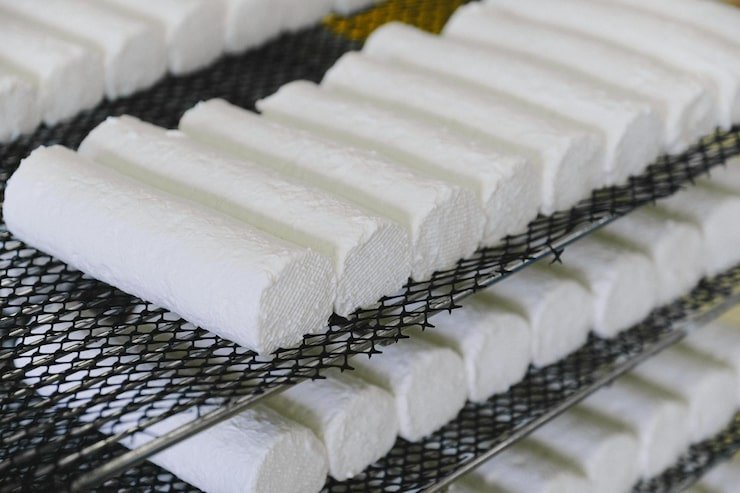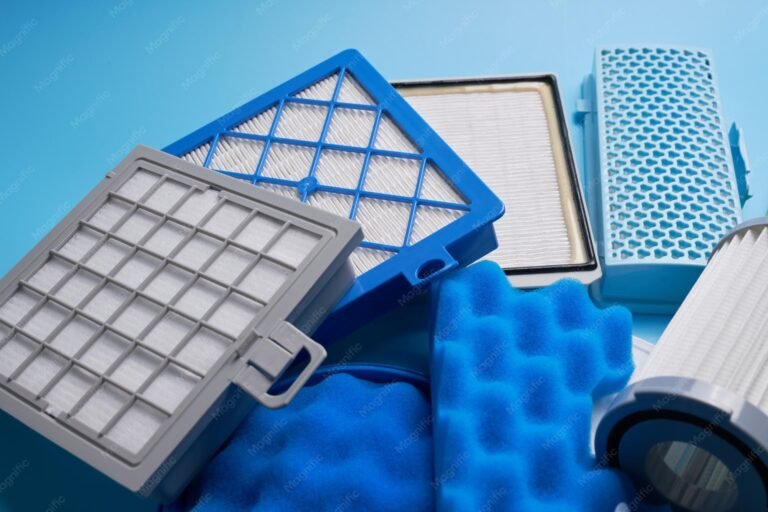
Choosing the right filter foam sheet is important for steady filtration. A foam that is too coarse may let unwanted particles pass through. Foam that is too fine may restrict airflow and raise pressure drops.
The choice also depends on thickness and density. These factors affect how much dust the foam can hold, how well air moves through it, and how the material holds its shape over time.
For this reason, filter selection should start with the needs of the application. Airflow, particle size, cleaning cycles, moisture, temperature, and available space all matter.
This guide explains the main factors to check before selecting an air filter foam sheet. It also covers how PPI, thickness, and density work together to support better filtration.
What Does PPI Mean in Filter Foam?
PPI stands for pores per inch. It shows how many pores are present within one inch of foam.
Filter foam PPI is one of the first specifications to check. A lower PPI means larger pores. These allow air to pass more easily and are useful for coarse filtration.
A higher PPI means smaller pores. This can improve the capture of smaller particles, but it can also increase airflow resistance.
A simple guide is:
- 10–20 PPI: Coarse filtration for larger dust, fibers, and debris
- 20–30 PPI: Medium filtration for general dust and pre-filtering
- 30–45 PPI: General filtration for finer dust
- 45–60 PPI: Fine filtration for smaller particles
- 60–100 PPI: More precise filtration for specialized applications
The right filter foam PPI is not always the most available. The aim is to choose a grade that captures the required particles without adding unnecessary resistance.
How PPI Affects Airflow and Particle Capture
PPI creates a balance between filtration and airflow.
A low-PPI filter foam has larger openings. Air moves through it with less resistance. However, very small particles may pass through.
A high-PPI air filter foam has smaller openings. It can capture finer particles, but airflow may become more restricted.
For a pre-filter, a coarse or medium PPI may be enough. A finer grade may be useful when smaller particles need to be captured.
The application should always guide the choice. Selecting a finer foam than needed can reduce useful filter life without adding much value.
Why Filter Foam Thickness Matters
PPI mainly affects pore size. Thickness affects the amount of foam available for particle loading.
Filter foam thickness determines how much dust the foam can hold before airflow becomes restricted. A thicker element gives particles more space to collect through the depth of the foam.
A thin sheet may load faster because more particles are collected near the surface. A thicker sheet allows deeper filtration and can support longer service intervals.
Common thickness choices include:
- 10–15 mm: Suitable for basic pre-filtration
- 20–30 mm: Useful for general HVAC and industrial applications
- 40–50 mm: Better suited to higher dust loads
- 50 mm and above: Used where deeper filtration or added buffering is required
However, housing often limits the available space. There is little benefit in choosing a thickness that cannot fit correctly.
Finding The Right Balance Between PPI And Thickness
PPI and thickness should not be considered separately.
A fine filter foam sheet may capture more small particles, but it can load faster if the thickness is too low. A thicker foam with a suitable PPI can provide more space for dust collection while maintaining airflow for longer.
This is why increasing thickness can sometimes be a better option than selecting a much finer PPI.
For example, a dusty outdoor machine may benefit from a deeper foam element with a suitable coarse PPI. A clean indoor system may not need the same thickness.
The best combination depends on the amount and size of particles in the air.
What Is Filter Foam Density?
Filter foam density refers to the mass of foam within a given volume. It affects the physical strength and stability of the material.
Density is not the same as PPI. PPI describes the pore structure, while density relates to the amount of material in the foam.
Higher-density foam generally offers:
- Better dimensional stability
- Greater resistance to compression
- Improved handling strength
- Better resistance to repeated cleaning
Lower-density foam is lighter and can be suitable for applications where filters are replaced rather than washed.
For reusable filters, choosing the right filter foam density becomes more important. The foam needs to retain its shape after repeated handling, cleaning, and installation.
How Density Affects Filter Life
A filter may be cleaned many times during its service life. Repeated squeezing, washing, and fitting can affect the foam.
Suitable filter foam density helps the material retain its shape. This is important because a poor fit can create gaps around the filter edges.
When this happens, some air may bypass the foam rather than passing through it. That can reduce filtration performance.
Density should therefore be selected according to the expected cleaning cycle, installation method, and mechanical demands of the application.
Selecting Foam for Different Applications
Different systems have different filtration needs.
An air filter foam sheet used in an automotive pre-filter may need to handle dust, vibration, and repeated cleaning. An HVAC application may focus more on airflow and coarse particle capture.
Industrial systems can face higher dust levels, moisture, oil, or chemical exposure. In such cases, the foam material must be compatible with the environment.
Before choosing air filter foam, consider:
- Particle size
- Airflow rate
- Dust loading
- Operating temperature
- Moisture exposure
- Oil or chemical contact
- Cleaning method
- Available filter space
These factors help determine the right PPI, thickness, density, and foam formulation.
A Practical Checklist Before Ordering
Before ordering a filter foam sheet, check the following points:
- What particle size needs to be captured?
- What airflow must pass through the filter?
- What level of pressure drop is acceptable?
- How much space is available for the foam?
- Will the filter be washed or replaced?
- Will it face moisture, oil, chemicals, or heat?
- Does the housing require a custom shape?
- How often will the filter need cleaning?
These answers make material selection much easier.
A suitable air filter foam sheet should match the complete operating environment, not just one specification.
When Reticulated Foam Is a Good Choice
Reticulated foam has an open structure with interconnected pores. This makes it useful where air needs to move through the filter while particles are captured.
A suitable filter foam can be made from reticulated polyurethane foam for applications that need controlled pore structure and good airflow. An experienced polyurethane foam manufacturer can provide different foam grades based on pore size, density, and application requirements.
The material can also be supplied in different sizes and shapes. This is useful when a standard panel does not fit the filter housing.
For OEM and industrial applications, custom cutting can help reduce extra work during assembly.
Getting The Specification Right from the Start
Choosing the right filter requires a balance between PPI, thickness, and density. Filter foam PPI controls the size of the foam openings and influences particle capture and airflow. Filter foam thickness affects dust-holding capacity and depth filtration. Filter foam density supports the material’s strength and dimensional stability.
The right filter foam sheet should therefore be selected around the actual application. A suitable air filter foam sheet can provide reliable filtration when its pore structure, thickness, and density are properly matched to system needs. Working with an experienced foam manufacturer can also make specifications easier when the application needs custom dimensions or a particular foam grade.
A specialized polyurethane foam manufacturer can help assess the required foam structure and fabrication needs. This is useful for automotive, HVAC, industrial, and other filtration systems where fit and consistent performance matter.
Kare foam manufactures reticulated polyurethane foam for filtration applications. They provide foam in different specifications and support custom fabrication for application-specific requirements. Their capabilities allow them to help customers select suitable foam based on factors such as pore structure, dimensions, and intended use.