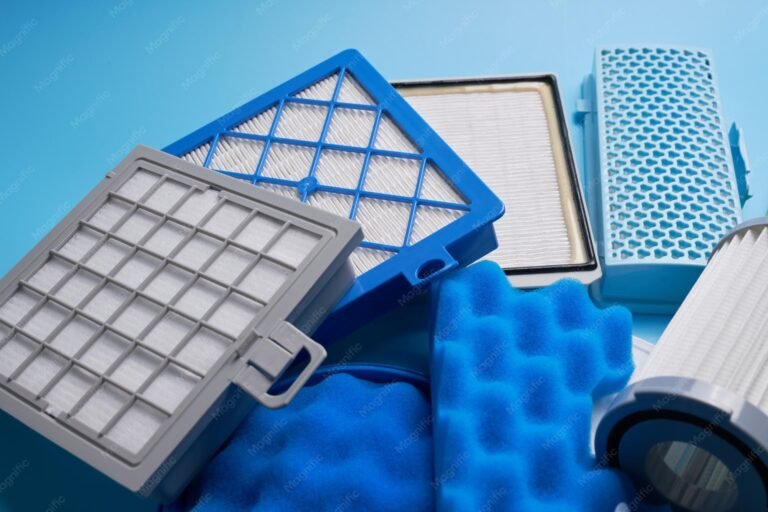
HVAC systems need clean and steady airflow to work well. Air filters help remove dust, dirt, fibres, and other particles from the air stream. The filter material must allow enough air to pass while also holding the unwanted particles.
This is where foam solutions can be useful. Open-cell polyurethane foam provides a porous structure that supports airflow and filtration. Reticulated foam has an open network of connected cells. This makes it suitable for air filtration and pre-filtration applications.
Air filter foam is used in HVAC units, air handling systems, ventilation equipment, and other air management applications. The right foam depends on factors such as pore size, thickness, density, airflow, and the level of filtration needed.
Understanding PU Foam in HVAC Filtration
PU foam for HVAC applications is a flexible polyurethane material designed for controlled airflow and filtration. Its open-cell structure allows air to move through the foam while helping retain particles.
Polyurethane foam for HVAC systems can be supplied in different grades. The choice depends on the operating environment and filter design.
The basic filtration process is simple:
- Air enters the filter.
- Dust and other particles meet the foam structure.
- Some particles become trapped within the cells.
- Cleaner air moves through the filter.
- The filter can then be cleaned or replaced, based on its design and use.
HVAC filtration foam can be designed for different airflow needs. This is important because a filter should not restrict air movement more than the system can handle.
Why Reticulated Foam Works Well
Reticulated filter foam is made by removing the thin membranes between foam cells. This creates an interconnected three-dimensional structure. Air can move through these open cells while particles are captured by the foam structure.
The open structure gives HVAC air filter foam several useful properties.
- High Air Permeability
Open cells provide clear pathways for air. This can help maintain airflow through the filter.
- Controlled Filtration
Foam can be produced with different pore sizes. This allows the material to be matched with different filtration needs.
- Easy Fabrication
Foam can be cut into sheets, rolls, or custom shapes. This helps manufacturers create filters for different equipment sizes.
- Reusable Options
Some filter foam grades can be washed and reused. The suitability depends on the material, application, and cleaning method.
Common HVAC Applications
PU filter foam can be used in several parts of an HVAC or air management system. The exact application depends on the equipment and requires filtration level.
Common uses include:
- Air handling units
- Air conditioning systems
- Ventilation equipment
- Air purification units
- Industrial air filtration
- HVAC pre-filters
- Equipment air intake filters
Polyurethane filter foam can also support filtration in areas where flexible and lightweight filter media are useful.
For example, foam for HVAC air filters can be cut to fit specific frames and housings. This makes it practical for equipment manufacturers that need custom filter dimensions.
Karefoam states that its technical PU foams are used in HVAC, appliances, air management, AC filters, ventilation systems, and air purification units.
Choosing The Right Foam Grade
Not every foam is suitable for every HVAC system. Material selection should start with the actual working conditions.
When selecting PU foam for HVAC filters, consider the following points:
- Pore size: PPI, or pores per inch, affects the structure and filtration behavior of the foam.
- Thickness: A thicker material may provide more surface area, but the effect on airflow must also be considered.
- Airflow: The filter must support the required air volume without creating excessive resistance.
- Environment: Humidity, temperature, chemicals, and dust levels can affect foam performance.
- Cleaning needs: If the filter is expected to be cleaned, the selected foam must suit the cleaning process.
- Filter design: The foam should match the required dimensions, shape, and mounting method.
These factors help determine whether polyurethane foam for HVAC filtration is suitable for a specific system.
Reticulated PU Foam and Airflow
The main benefit of reticulated PU foam for HVAC use is its open-cell structure. It provides many connected pathways for air movement.
At the same time, the cell structure provides surfaces where particles can be collected. This balance between airflow and particle retention is important in filter design.
Reticulated foam for HVAC filters is available in different PPI grades. A lower or higher pore count can affect airflow and filtration behaviour. Therefore, PPI should be selected according to the application rather than treated as a one-size-fits-all specification.
HVAC filter foam should also have a consistent cell structure. Uneven pores may affect airflow and filtration performance.
Material Choice for Different Conditions
Polyurethane filter foams can be made using different base materials. Karefoam identifies both polyether and polyester PU options for reticulated filter foam.
Polyether grades can be useful in humid or wet environments because of their hydrolysis resistance. Polyester grades can offer mechanical strength and chemical resistance. The correct choice depends on the working conditions.
This makes PU foam solutions for HVAC filtration useful when filter requirements vary between applications.
For manufacturers, air filter foam can also be supplied in customized sizes and formats. This reduces the need to modify standard foam sheets for every filter design.
Benefits For HVAC Equipment Manufacturers
Using HVAC filtration foam can offer practical benefits when the material is correctly selected.
These include:
- Flexible processing and cutting
- Lightweight construction
- Custom pore size options
- Good air permeability
- Easy integration into filter designs
- Potential for washable applications
- Availability in different densities and formats
PU filter foam can also be shaped for specific equipment requirements. This is useful for OEMs that need consistent filter components across different models. Working with a polyurethane foam manufacturer can help ensure the foam is produced according to specific application and performance requirements.
A suitable polyurethane filter foam should therefore be selected based on measurable requirements rather than appearance alone.
What To Check Before Buying
Choosing a reliable water cooled scroll chiller is not relevant to this application; HVAC filtration requires a foam supplier with the right material and conversion capabilities.
Instead, buyers should check:
- Foam type and base material
- PPI or pore size
- Thickness and density
- Airflow requirements
- Operating temperature
- Humidity exposure
- Cleaning requirements
- Available cutting and fabrication options
- Consistency between production batches
A specialised reticulated filter foam manufacturer can help match the foam grade with the intended application.
A water cooled scroll chiller should not be confused with an HVAC filtration component, as the two serve different functions.
Getting The Right Foam for HVAC Filtration
Good filtration starts with the right material choice. PU foam for HVAC filters can provide a practical option for systems that need open-cell filtration and controlled airflow.
The best polyurethane foam for HVAC filtration depends on the system, operating environment, pore size, thickness, and filtration requirement. Foam solutions should be developed around these factors instead of using the same grade for every application.
Karefoam develops and supplies reticulated polyurethane foam solutions for filtration and HVAC applications. They offer polyether and polyester PU foam options, along with customised solutions for specific requirements.
Their PU foam solutions for HVAC filtration can support applications that require customised pore sizes, formats, and material grades. Their range of HVAC air filter foam and reticulated PU foam for HVAC applications is focused on practical filtration needs.
For businesses looking for foam for HVAC air filters, selecting the material with the actual airflow and operating conditions in mind can help create a more suitable filtration solution.