Not every aquarium needs complex filtration. Sometimes the simplest system works best. This guide explains when a sponge filter is the right choice and what truly determines its performance.
A healthy aquarium depends on stable water. Clear water is not just about appearance. It is about maintaining balance inside the tank. Fish release waste. Leftover food breaks down. Toxins like ammonia build up quietly. Without proper filtration, this can harm aquatic life.
Among the many filtration options available, the sponge filter remains one of the simplest and most dependable systems. It is widely used in breeding tanks, shrimp setups, and small aquariums.
But is a sponge filter for fish tank setups always the right choice? Let’s understand where it works best and where it may not be enough.
What Is a Sponge Filter for Aquariums?
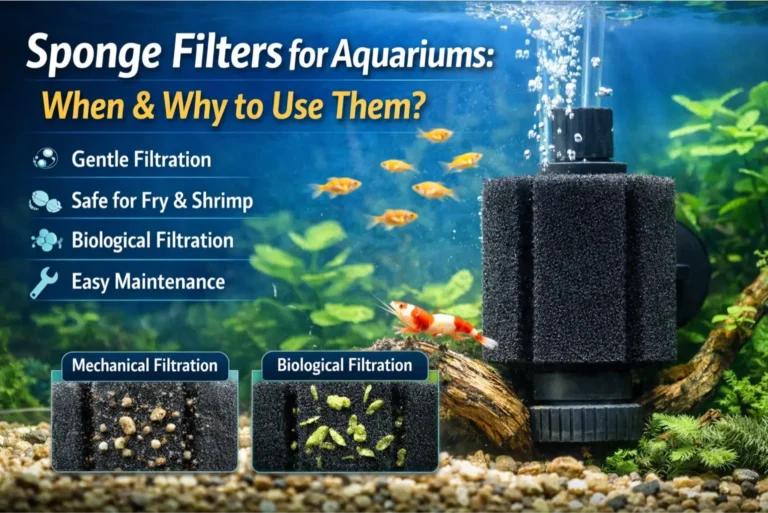
A sponge filter is a basic filtration unit made of:
- A porous aquarium sponge
- A lift tube
- An air pump
The air pump pushes air upward through the tube. This movement pulls water through the sponge.
As water passes through the filter foam sponge, two important things happen:
- Solid waste particles are trapped inside the sponge.
- Beneficial bacteria grow within the porous structure.
This is why sponge filters for aquarium setups provide both:
- Mechanical filtration
- Biological filtration
They do not rely on complicated parts. Their strength lies in simplicity.
How Does a Sponge Filter Clean the Tank?
The cleaning process is gentle but effective.
Water moves through the aquarium filter foam, where:
- Debris gets caught in the pores.
- Good bacteria settle inside the open-cell structure.
- Harmful substances like ammonia are broken down.
The quality of the fish tank filter foam plays a major role here.
Good open-cell polyurethane foam allows:
- Proper airflow
- Better dirt retention
- Strong bacterial growth
A well-made foam filter aquarium media keeps water stable without creating strong currents.
When Are Sponge Filters the Best Choice?
Sponge filters are not universal solutions. But in certain situations, they perform exceptionally well.
Small Tanks and Nano Aquariums
Strong water movement can bother fish and plants in small tanks. A small sponge filter cleans the water without putting too much stress on the tank.
Sponge filters for aquariums are often useful and work well for tanks that hold less than 20 gallons. They fit well and keep the biological balance stable.
Breeding Tanks and Fry Care
Breeding tanks need safe filters. Fry are fragile. Strong suction can hurt them.
- A sponge filter for fish tank breeding setups works well because:
- The sponge surface is soft.
- There is no exposed intake.
- Water flow remains mild.
This makes it perfect for prawns, fry and other fish that swim slowly.
Shrimp and Delicate Fish Setups
Stable water and low flow are good for shrimp tanks.
A thick but open-cell aquarium sponge traps waste while still being safe for small invertebrates. It lowers stress and helps bacteria grow, which is good for prawn health.
Quarantine and Hospital Tanks
Temporary tanks require simple and reliable filtration.
Many aquarists keep an extra sponge filter running in an established tank. When needed, it can be moved to a quarantine setup. The bacteria inside the filter foam sponge are already active, which helps maintain water stability.
In these situations, dependable fish tank filter foam becomes very useful.
Backup Biological Filtration
Some aquarists use sponge filters alongside larger filters.
They act as additional biological media. Because the aquarium filter foam holds bacteria well, it supports long-term stability.
Situations Where Sponge Filters May Not Be Enough
It is important to understand the limits.
Sponge filters may not be suitable for:
- Large aquariums with heavy fish load
- Tanks with large, messy fish
- Setups requiring chemical filtration
- High-flow aquascapes
In such cases, they may serve as supplementary filtration rather than the primary system.
Why Does Foam Quality Matter in Sponge Filters?
The performance of a sponge filter depends heavily on the foam material.
A high-quality foam filter aquarium media should have:
- Open-cell structure
- Consistent pore size
- Strong durability
- Resistance to repeated washing
Reticulated polyurethane foam is often preferred because it:
- Allows uniform water flow
- Holds debris effectively
- Supports bacterial growth
- Maintains structure over time
This is why choosing a reliable polyurethane foam supplier is important. Poor-quality foam can collapse, clog too quickly, or restrict flow.
A well-engineered aquarium filter foam ensures steady performance and longer lifespan.
Is a Sponge Filter Right for Your Aquarium?
A sponge filter works well if you:
- Maintain a small or medium tank
- Keep shrimp, fry, or delicate fish
- Prefer simple, low-maintenance systems
- Need a safe biological filter
- Want a backup or quarantine filter
It may not replace advanced systems in large tanks. But in the right setup, it provides consistent and gentle filtration.
Simple Filtration with Lasting Value
Sponge filters are not flashy. They do not use complex cartridges or high-power motors. Yet, in many aquariums, they perform reliably and quietly.
The key lies in using the right aquarium sponge and quality filter foam sponge that supports both mechanical capture and biological growth.
At Kare Foam, we have over 15 years of experience manufacturing reticulated polyurethane foam solutions. As a trusted polyurethane foam supplier, we design high-performance aquarium filter foam with open-cell structures that promote optimal water flow and strong bacterial support.
Our foam solutions are engineered for durability, consistency, and aquatic safety. Whether you are setting up a small sponge filter or supplying filtration media at scale, we offer precision-crafted foam tailored for aquarium applications.
If you are looking for reliable fish tank filter foam that delivers steady performance, we are here to support your filtration needs.
Explore our reticulated PU filter foam range and build a healthier aquatic environment with confidence.