An aquarium filter sponge may look basic, but it plays a major role in keeping your tank clean and healthy. Here’s how to use it properly, maintain it, and get the best results for your fish.
If you’re setting up a fish tank or upgrading your filtration, chances are you’ve come across an aquarium filter sponge. It may look simple, but this humble piece of foam does a lot of heavy lifting inside your tank.
From keeping water clear to helping beneficial bacteria grow, a sponge filter is one of the easiest and most reliable filtration options out there.
Let’s walk through what it is, how it works, and exactly how to use it the right way.
What Is an Aquarium Filter Sponge?
An aquarium filter sponge is a porous foam material designed to trap debris and support beneficial bacteria. It filters both mechanically and biologically.
When water goes through the sponge:
• Debris and dirt get stuck
• Good bacteria grow inside the pores
• Cleaner water flows back into the tank
Because of this, sponge filters are very popular with beginners, breeders, and anyone who wants a filter that is low-maintenance.
Why Use a Sponge Filter for a Fish Tank?
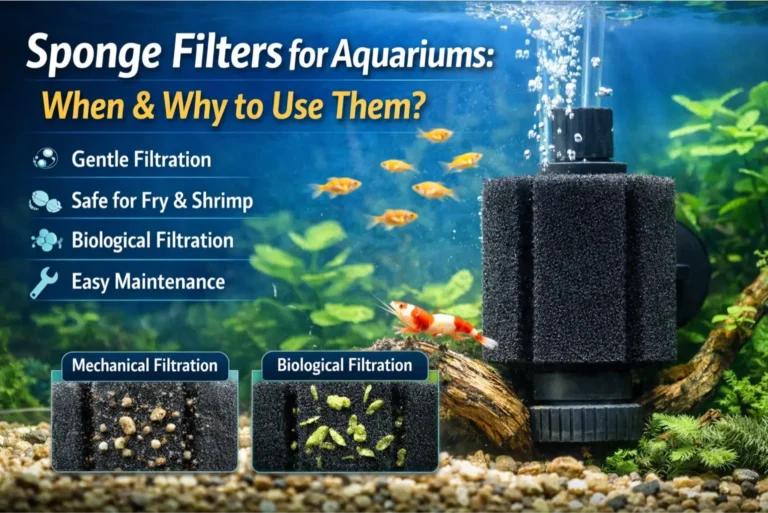
A sponge filter for a fish tank is safe for all kinds of fish and works well.
People choose sponge filters because:
• They don’t make strong currents
• They are safe for shrimp and fry.
• It’s easy to clean and use them again.
• They improve water quality by supporting beneficial bacteria.
Sponge filters are a good choice for both small home aquariums and breeding tanks.
Understanding the Materials Inside the Sponge
Most aquarium sponges are made from aquarium foam, usually open-cell foam that allows water to flow freely.
High-quality aquarium filter foam:
• Holds its shape underwater
• Has consistent pores
• Doesn’t crumble or release particles
• Supports bacterial growth
This is why material quality matters more than many people realise.
Types of Aquarium Sponge Filters
Before using one, it helps to know what type you have.
Air-Driven Sponge Filters
These connect to an air pump. Rising bubbles pull water through the sponge, filtering it gently.
Power Filter Sponges
These use a small motor to pull water through the aquarium sponge filter foam. They offer stronger filtration but still stay fish-safe.
Both use the same basic sponge principle.
How to Use an Aquarium Filter Sponge Step by Step
Step 1: Rinse the Sponge Before Use
Before placing the sponge in your tank, rinse it with dechlorinated water or old tank water to remove manufacturing dust.
Do not use soap or household cleaners. Just water is enough.
Step 2: Set Up the Filter System
Attach the sponge to:
• An air lift tube for air-driven systems
• A power filter unit if designed for it
Make sure it fits securely so water flows through the sponge, not around it
Step 3: Place It Inside the Tank
Position the sponge:
• Near the bottom of the tank
• Away from aggressive currents
• Where water can circulate easily
Good placement ensures even filtration across the tank.
Step 4: Let Beneficial Bacteria Build Up
This part takes time.
After installation, the sponge slowly develops colonies of beneficial bacteria. These bacteria help break down fish waste and keep ammonia levels under control.
Avoid cleaning the sponge too often, especially in the first few weeks.
For more details on sponge filters and how they provide effortless filtration, check out our article on Sponge Filters: The Easiest Fish Tank Filter Ever.
How to Clean an Aquarium Filter Sponge Properly
Cleaning is important, but over-cleaning can do more harm than good.
Here’s the safe way:
• Remove the sponge during a water change
• Rinse it gently in old tank water
• Squeeze lightly to release trapped debris
• Put it back immediately
Never rinse your sponge under tap water. Chlorine can kill beneficial bacteria.
How Often Should You Clean the Sponge?
This depends on your tank size and fish load.
As a general rule:
• Lightly stocked tanks: every 3 to 4 weeks
• Heavily stocked tanks: every 2 weeks
If water flow slows down, it’s a sign the sponge needs cleaning.
When Should You Replace the Sponge?
A good filter foam should last a long time.
Replace the sponge only if:
• It starts crumbling
• It loses its shape
• Water can’t pass through even after cleaning
High-quality foam lasts much longer and performs consistently over time.
Why Foam Quality Makes a Big Difference
There are different kinds of aquarium foam.
Sponges that are of poor-quality break down quickly and get stuck easily. This makes it harder to filter and can change the quality of the water.
Reliable aquarium sponge filter foam has:
• Pores are evenly spaced
• Lasts a long time
• Works well in water
This is very important for tanks that only use sponge filters.
The Right Sponge Does All the Job
Using an aquarium filter sponge is one of the simplest ways to keep your fish tank clean and balanced.
With proper setup, gentle cleaning, and the right foam material, sponge filters can quietly do their job for years. They support healthy bacteria, protect delicate fish, and keep water conditions stable.
At Kare Foam, we understand how important material quality is in filtration systems. As a trusted polyurethane foam manufacturer, we produce high-performance aquarium foam and aquarium filter foam designed for durability, consistency, and safe underwater use.
When filter foam is engineered properly, it doesn’t just trap waste. It supports the entire ecosystem inside your tank.
Sometimes, better filtration starts with better foam.